
The Story behind ‘A Still Life Reimagined’
How the Still Life tradition finds new meaning through regeneration and relationship.
The Origins of Still Life
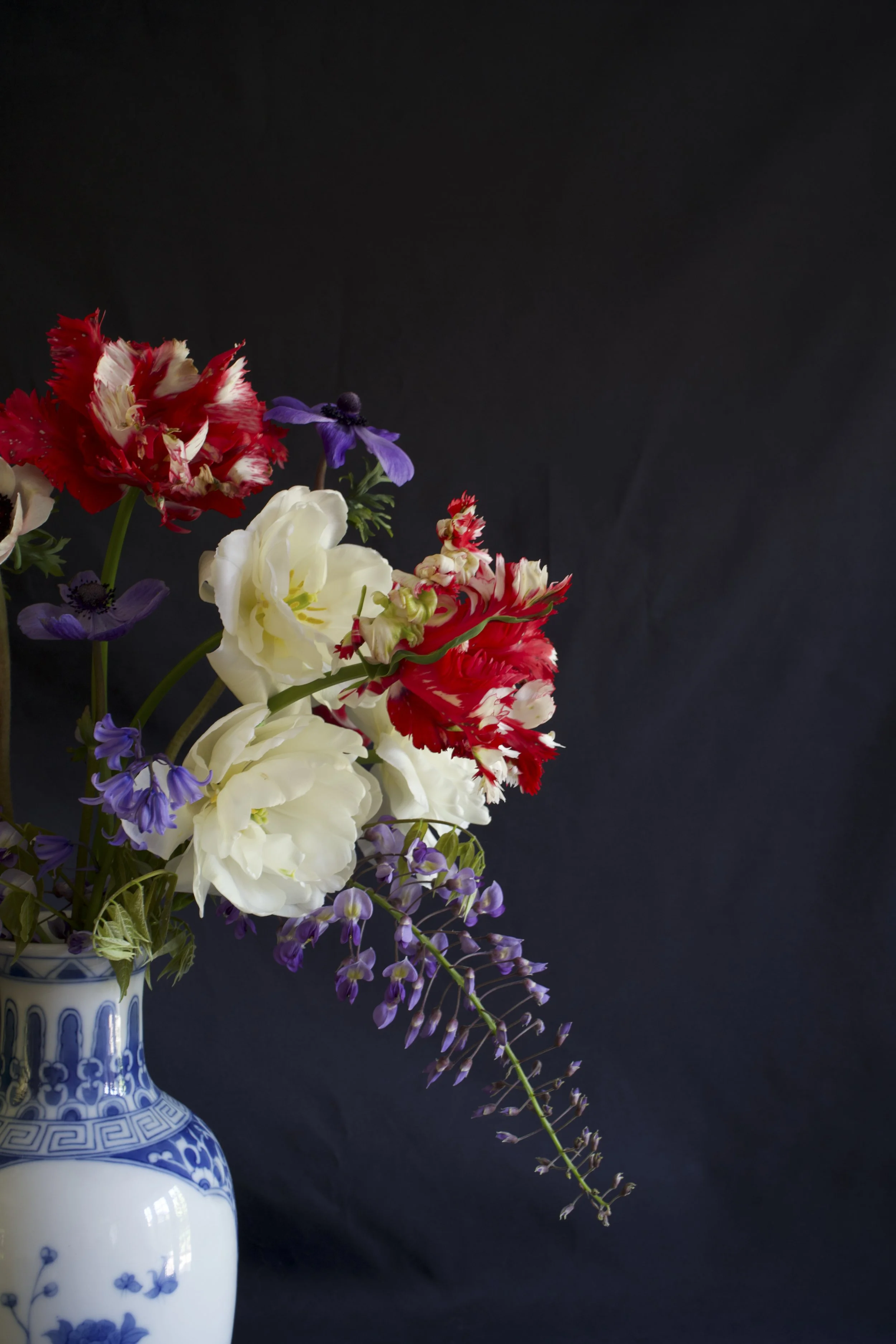
Still Life is a genre of art that has captivated artists for centuries. Much of its early development came from the Netherlands during the era of the Dutch Masters where it flourished in the 17th century. It was a time of prosperity built on trade, empire, and exploration. Rare and exotic flora were brought to Europe from faraway lands, feeding a hunger for novelty, beauty, and possession. Flower specimens often cost more than the paintings themselves. Material goods like Chinese porcelain, Venetian glass, and silver trays filled the homes of the wealthy; symbols of refinement and status. Still Life became a mirror of a society that equated abundance with worth.
Beauty, Power and Care
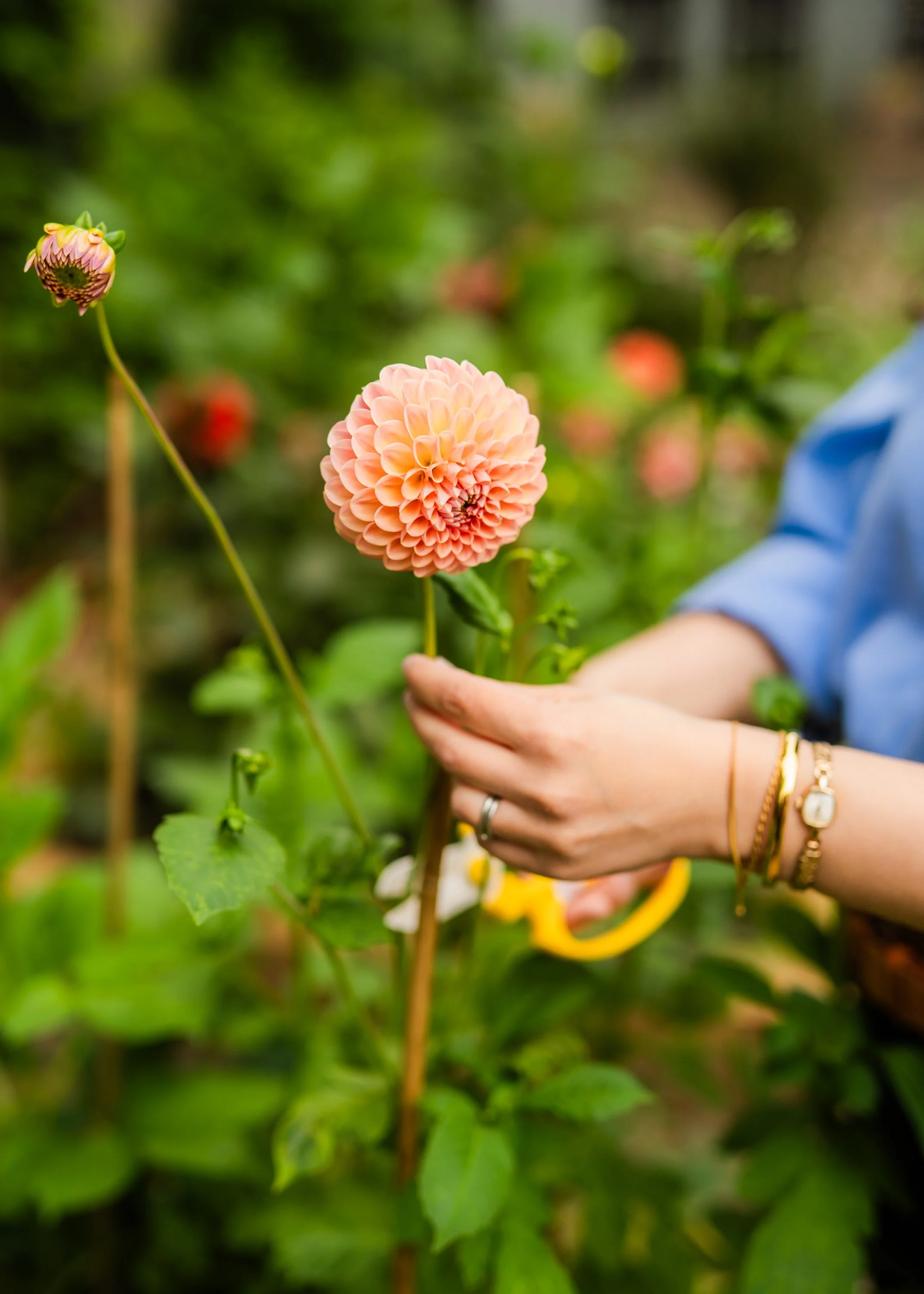
Yet within this world of commerce and prestige, a more gentle story has made its way into the imaginations of countless artists over time. Still Life, particularly floral Still Life, was often dismissed as “feminine” or “domestic,” but it quietly honoured the virtues of care, attention, and reverence as well as the notion of impermanence.
To tend a garden and to compose a Still Life share the same purpose: both are acts of noticing, of devotion, of believing that beauty itself can be a form of care.
Dutch Masters and the Passage of Time
Artists like Ambrosius Bosschaert (1573–1621) painted exquisite, symmetrical bouquets that often combined flowers from across the world, blooms that would never coexist in nature.
A single painting might take years to complete, an illusion of timelessness that belied the genre’s central theme: the fleeting nature of life.
Later painters, such as Rachel Ruysch (1664–1750), introduced movement and vitality through more natural, asymmetrical designs. Her work breathed life into Still Life, echoing the loose and intuitive floral styles we are drawn to today; arrangements that emulate nature rather than control it.
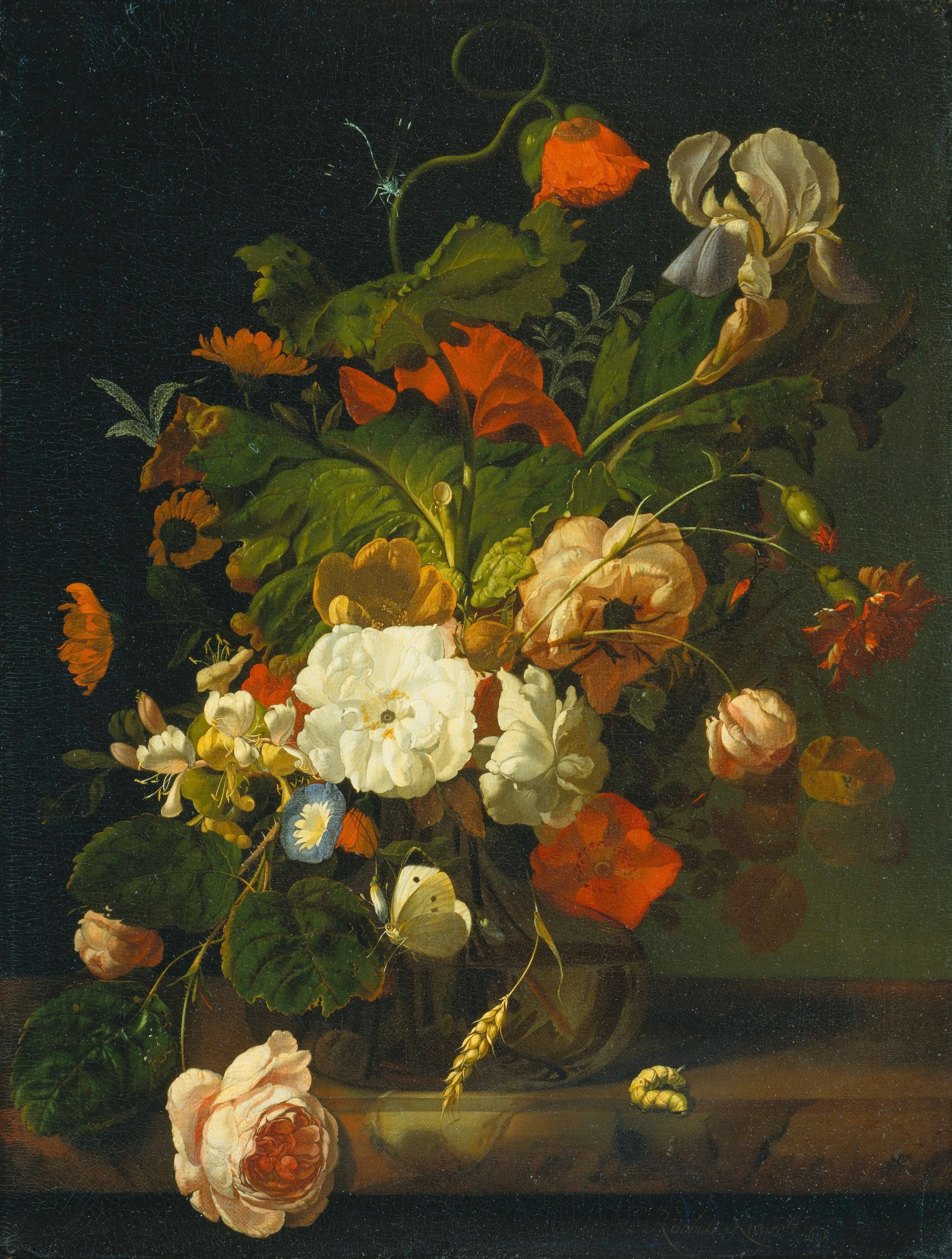
‘Still Life with Flowers’ Rachel Ruysch (1664-1750)
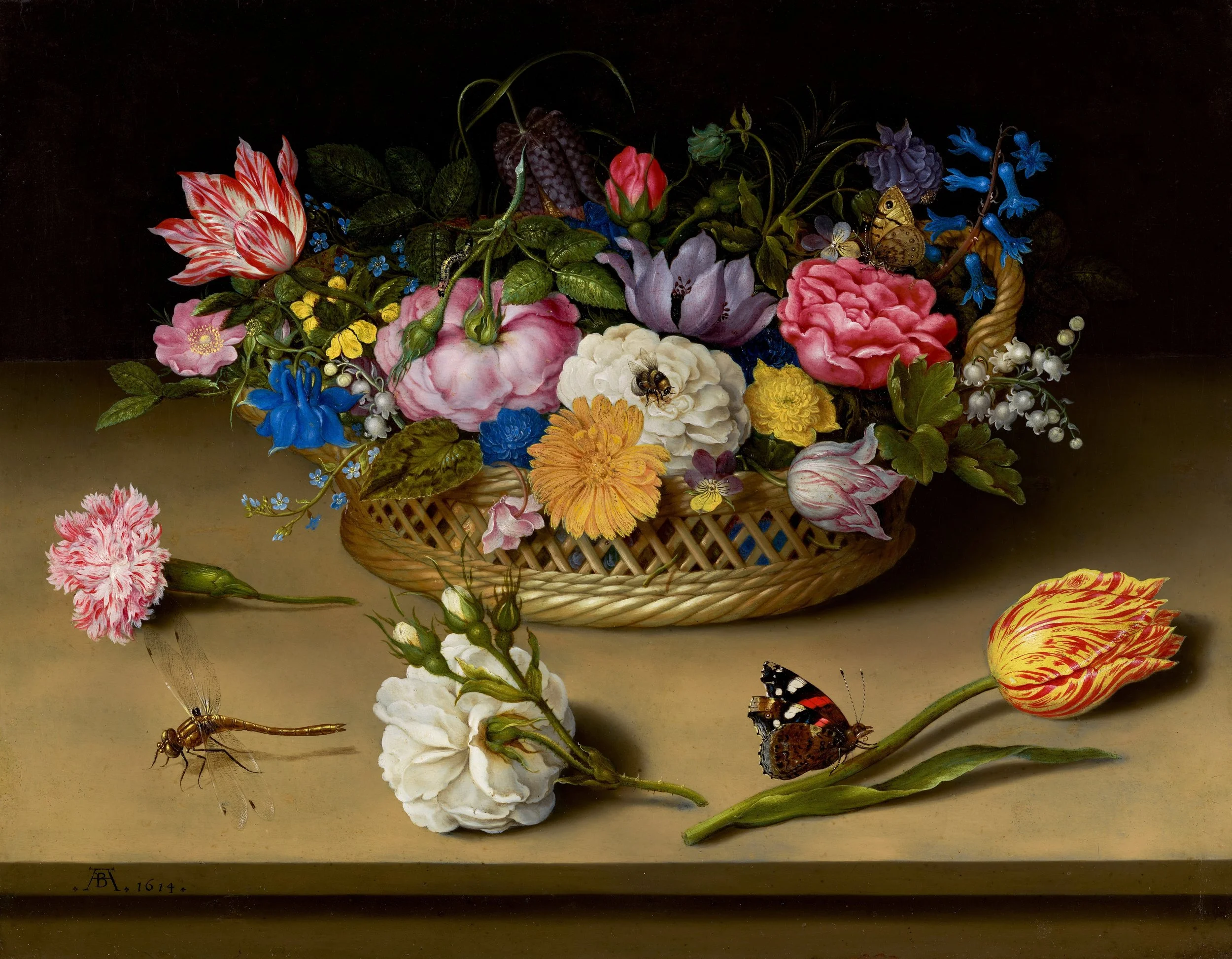
‘Flower Still Life’ Ambrosius Bosschaert (1573-1621)
The Meaning beneath the surface
In the 16th century, during the Dutch Reformation, religious imagery was banned, prompting artists to encode their values symbolically: a white rose for love, a lily for virtue, a skull or dying flower as a reminder of mortality:
“Memento Mori - remember you must die.”
While the original meanings may be partly lost to time, the impulse behind them remains deeply human: to honour beauty while acknowledging its impermanence, to find meaning in the cycles of life and loss.
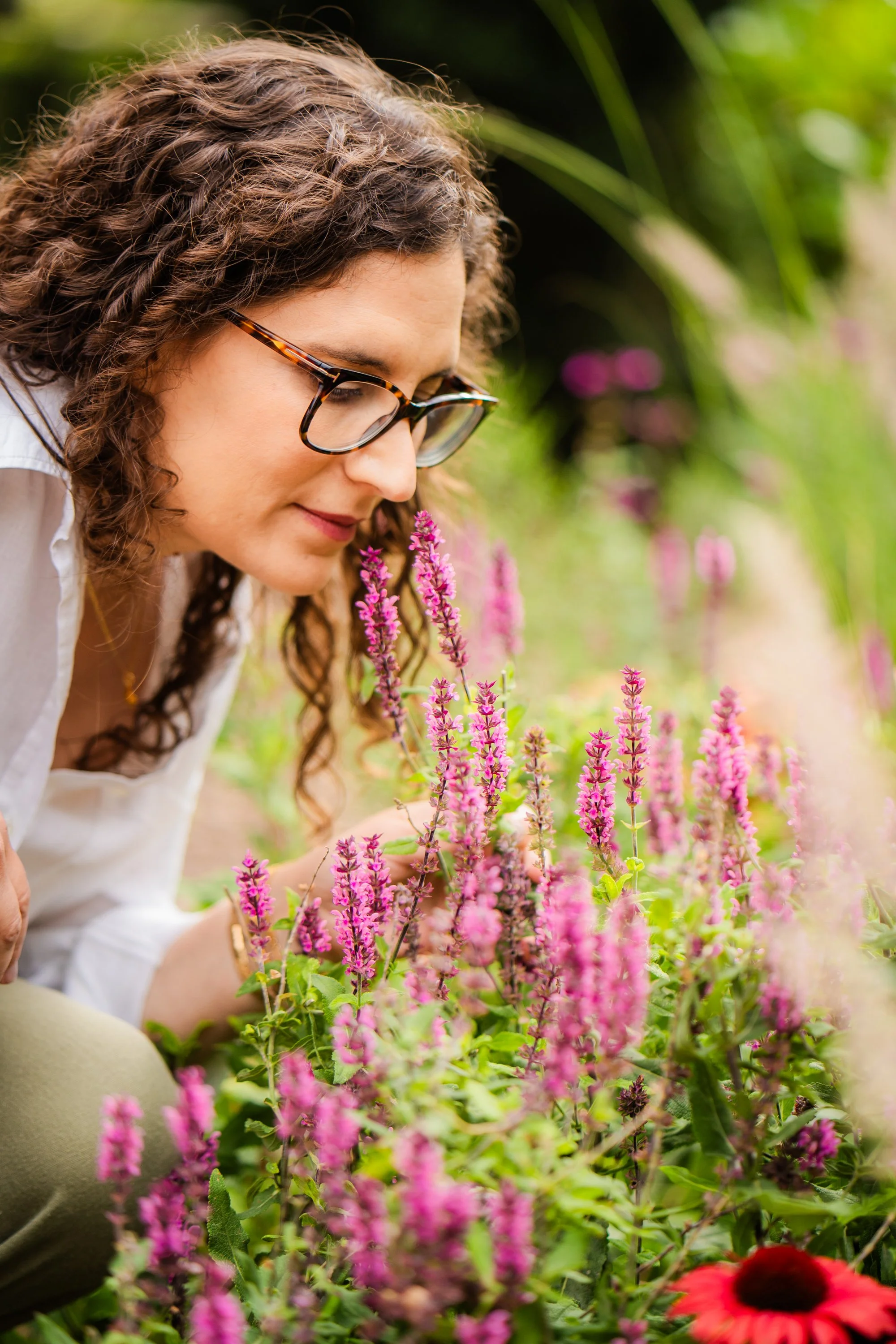
Returning to Right Relationship
My own work looks back to this lineage while asking a new question for today’s world:
What if Still Life could move beyond the story of extraction and return to a story of relationship, with nature, with time, and with one another?
Before colonialism and industrialisation, many global Indigenous and ancestral European cultures understood beauty as relational; something created through reciprocity, not ownership. I’m endlessly drawn to and inspired that idea.
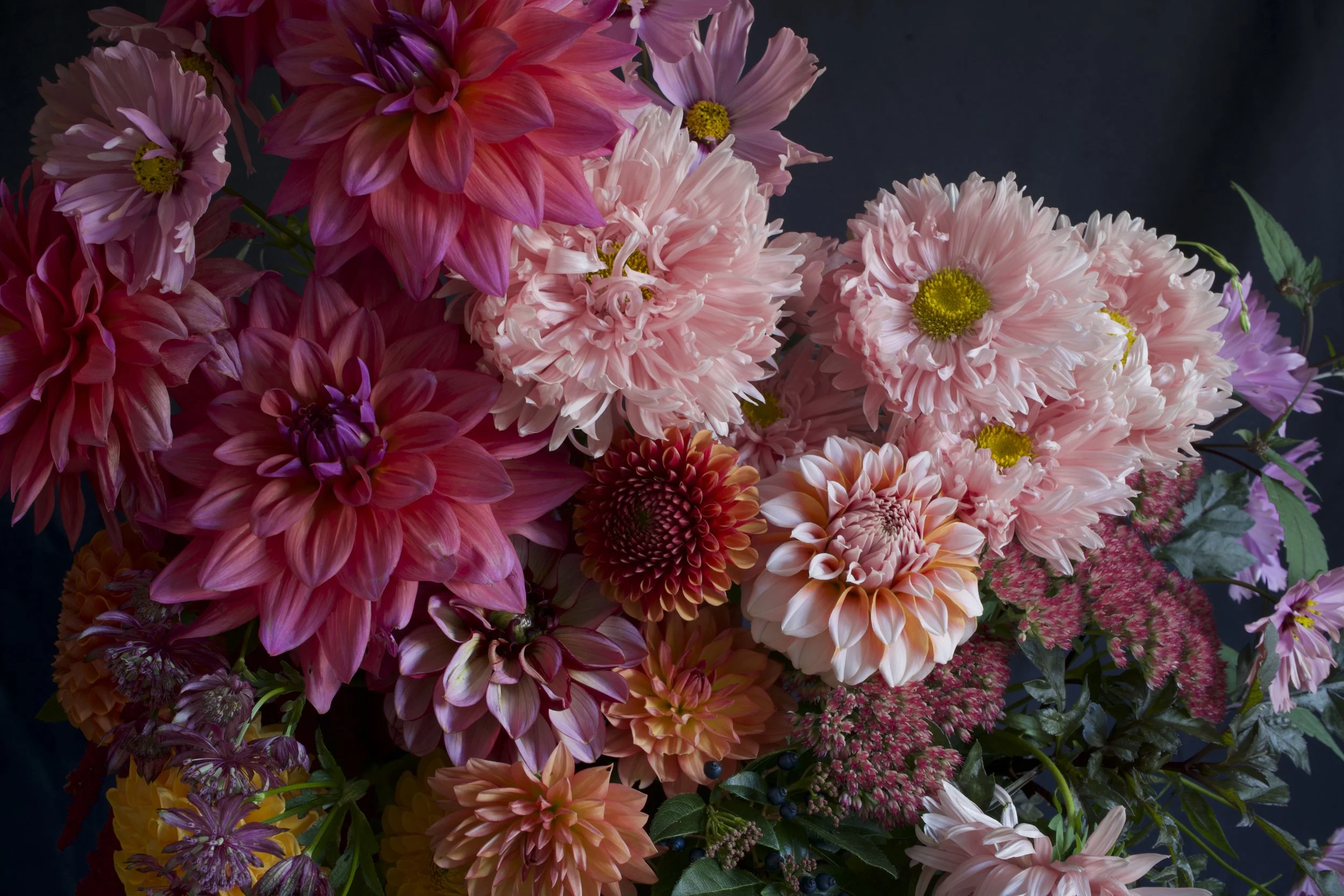
The flowers I photograph are grown seasonally in my own garden: local, not global, within an ecosystem that supports soil health, pollinators, and the subtle web of life that connects it all.
Regeneration and Reverence
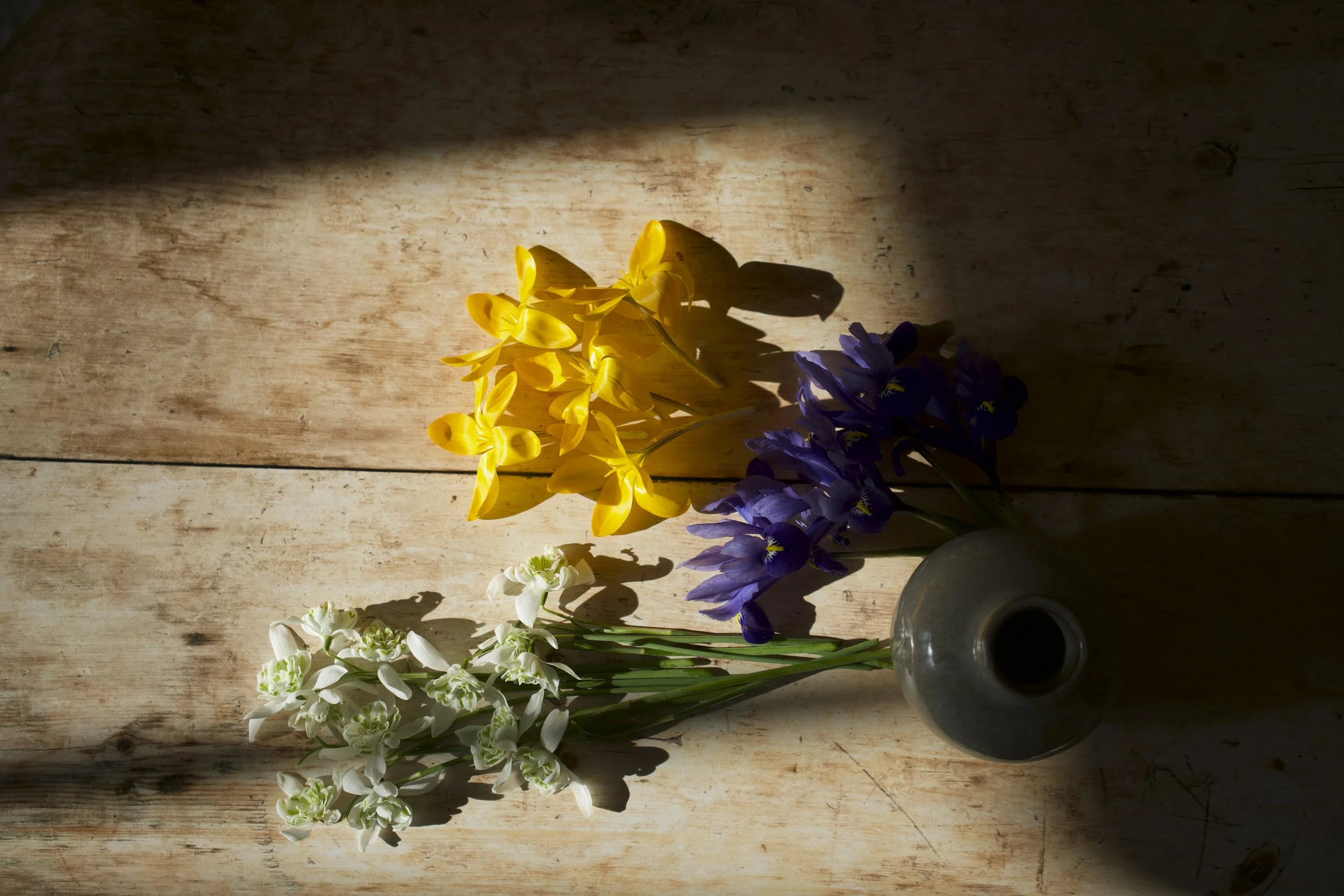
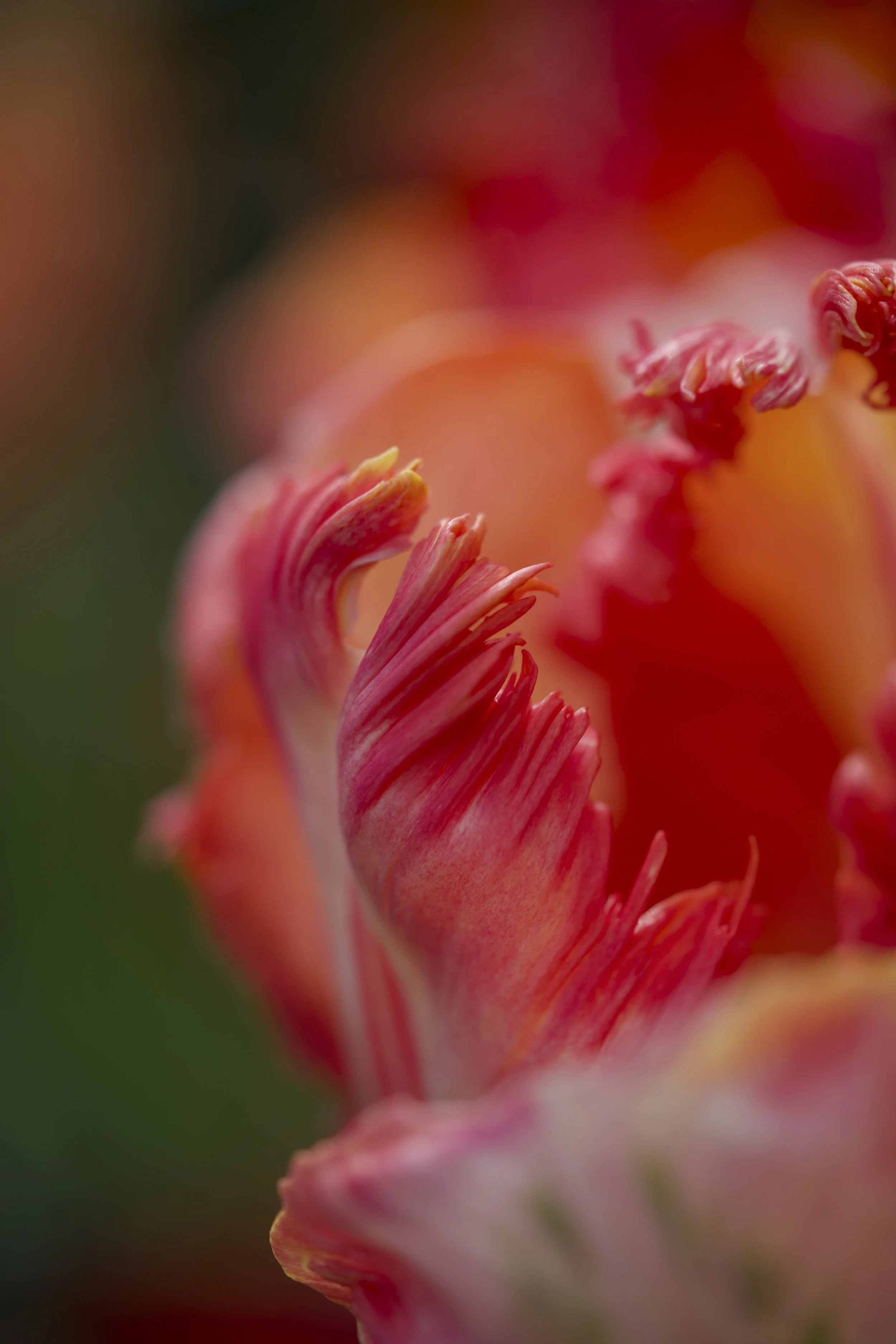
To create regeneratively is to resist the extractive mindset that shaped both the 17th century Still Life genre of art and modern agriculture. Each image in my Still Life: Reimagined collection is born from a cycle of giving and receiving, between the land and me, between my garden and my community.
These gardens are not only about the flowers themselves, but about the community that surrounds them:
the neighbours who pause to talk over the fence, the bees that return each year, the compost shared, the conversations sparked.
Beauty, in this way, becomes a shared act; something grown with others, not just for oneself.
Still Life, for me, is a practice of noticing what is here now: the fleeting light, the curve of a petal, the quiet generosity of soil. It’s a meditation on time, impermanence, and gratitude and a reminder that beauty’s truth lies in its transience, not its possession.
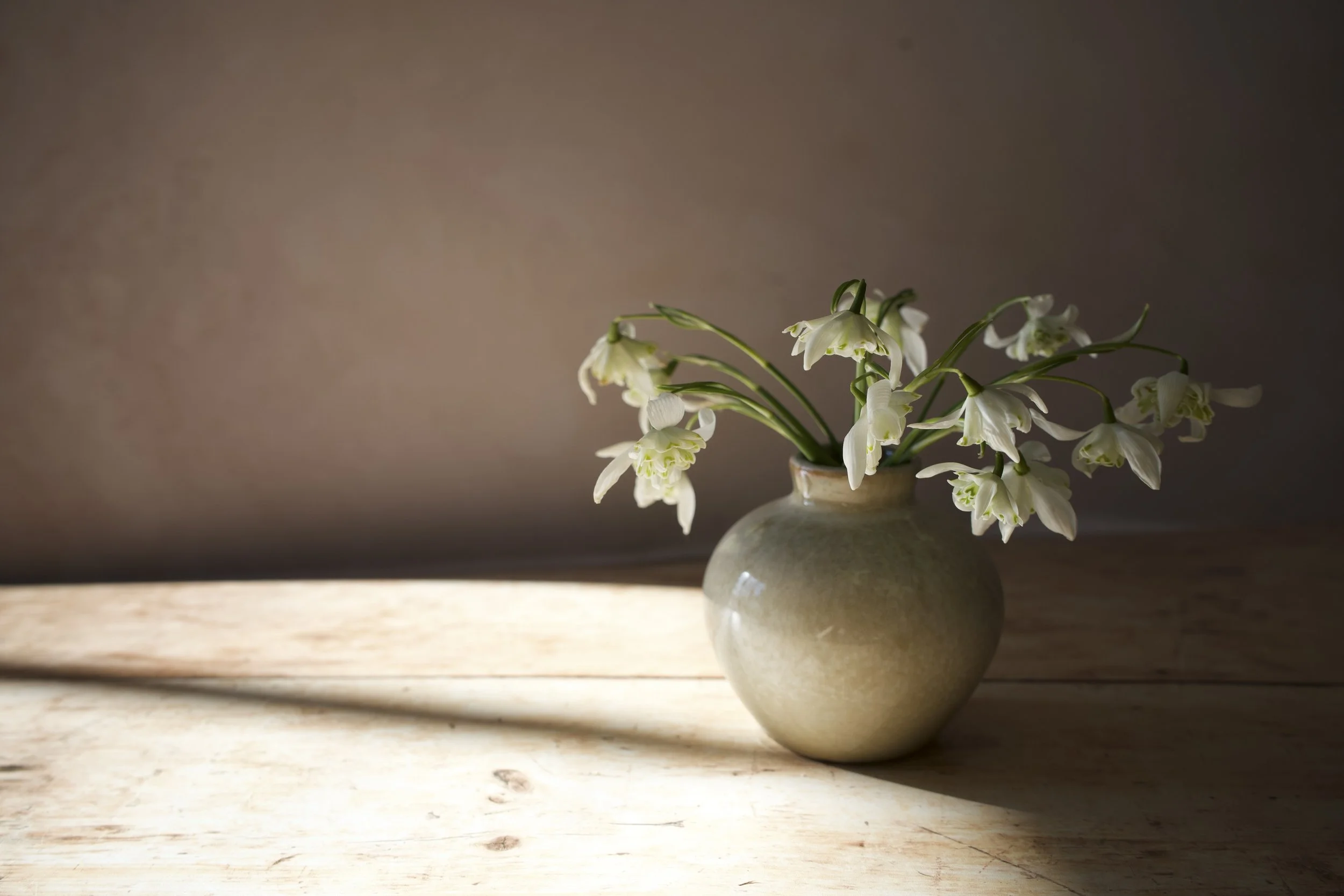
Photographs Copyright Lisa Unwin 2025
An Offering
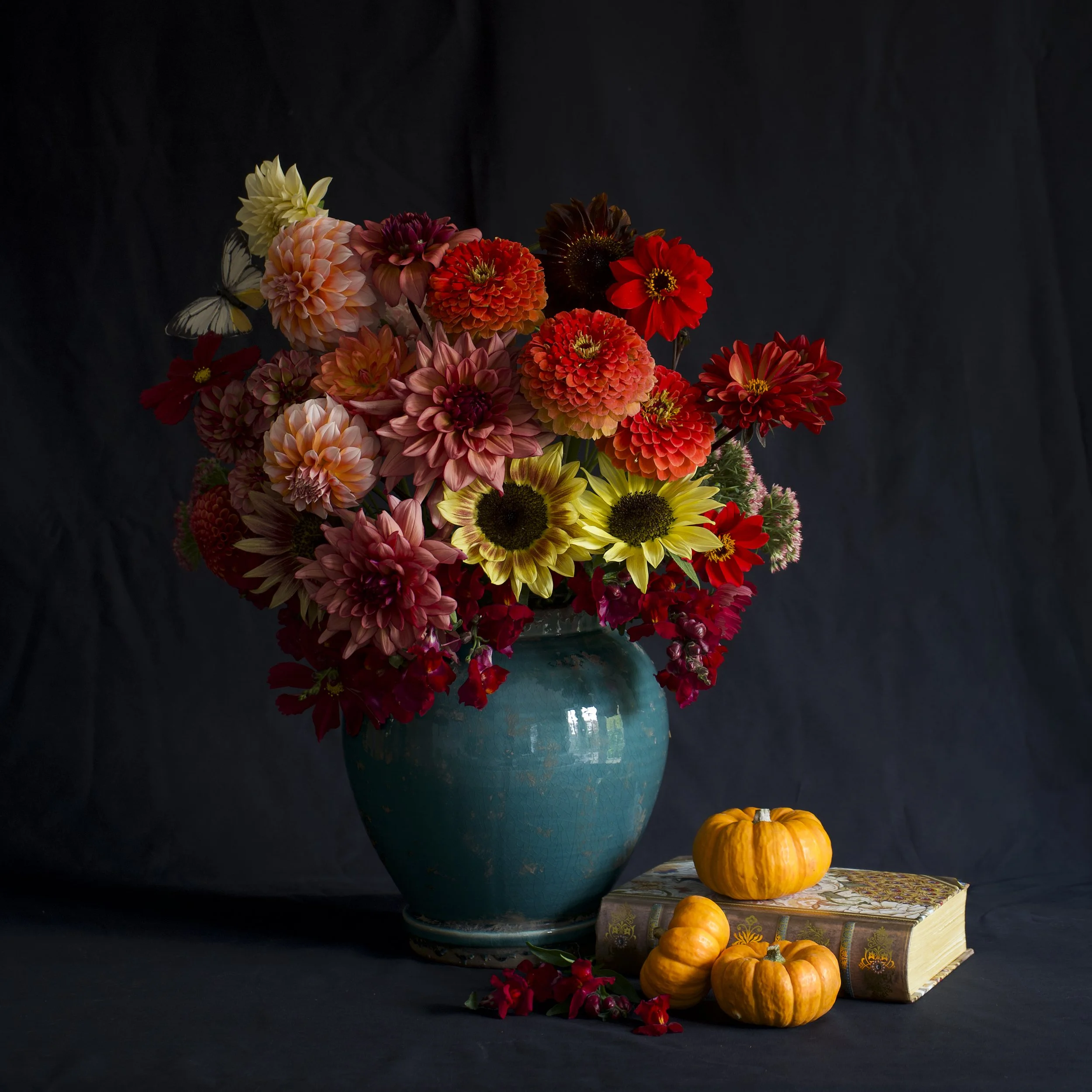
A Still Life: Reimagined stands as a gentle counterpoint to the history that inspired it. Where the Still Life of the Dutch Golden Age reflected wealth and ownership, these works are an offering of connection, reciprocity, and restoration.
They are not reproductions of the past, but continuations of a living conversation, between soil and soul, artist and ecosystem, garden and neighbour.
Each photograph is a small act of reverence and a reminder that when we work with the land, not against it, regeneration follows.
And through that regeneration of soil, of beauty and of community we begin, piece by piece, to restore what it means to be human as an interconnected part of every natural thing that surrounds us.