
The Life Beneath Our Feet
The late poet and linguistic advocate for the natural world Wendell Berry famously said:
“The soil is the great connector of lives, the source and destination of all. It is the healer and restorer and resurrector, by which disease passes into health, age into youth, death into life. Without proper care for it we can have no community, because without proper care for it we can have no life.”
I have been gardening since I was a child. The first piece of garden I tended was gifted to me by my dad when I was 7 years old. It was a 1m x 1m piece of his garden which I cared for so diligently and I was so proud of. Over the years, my dad passed down to me knowledge of plants that he had inherited from his father, my granddad, who was also a gardener. I learned how to plant, how to water, what the names of plants were, how to prune and what to plant where and with what. I learned how to garden by learning the rules. However, I never really learned the underlying science beneath my feet including the purpose and role of soil. Even though my dad and I often dug the soil together, we never really talked about it. I remember creating drills in finely tilled soil with my dad to plant seeds, but I don’t recall ever having it explained to me what soil actually is and why it matters to the garden and to what we were growing. It simply felt like a medium, something to prepare and to hold the plants.
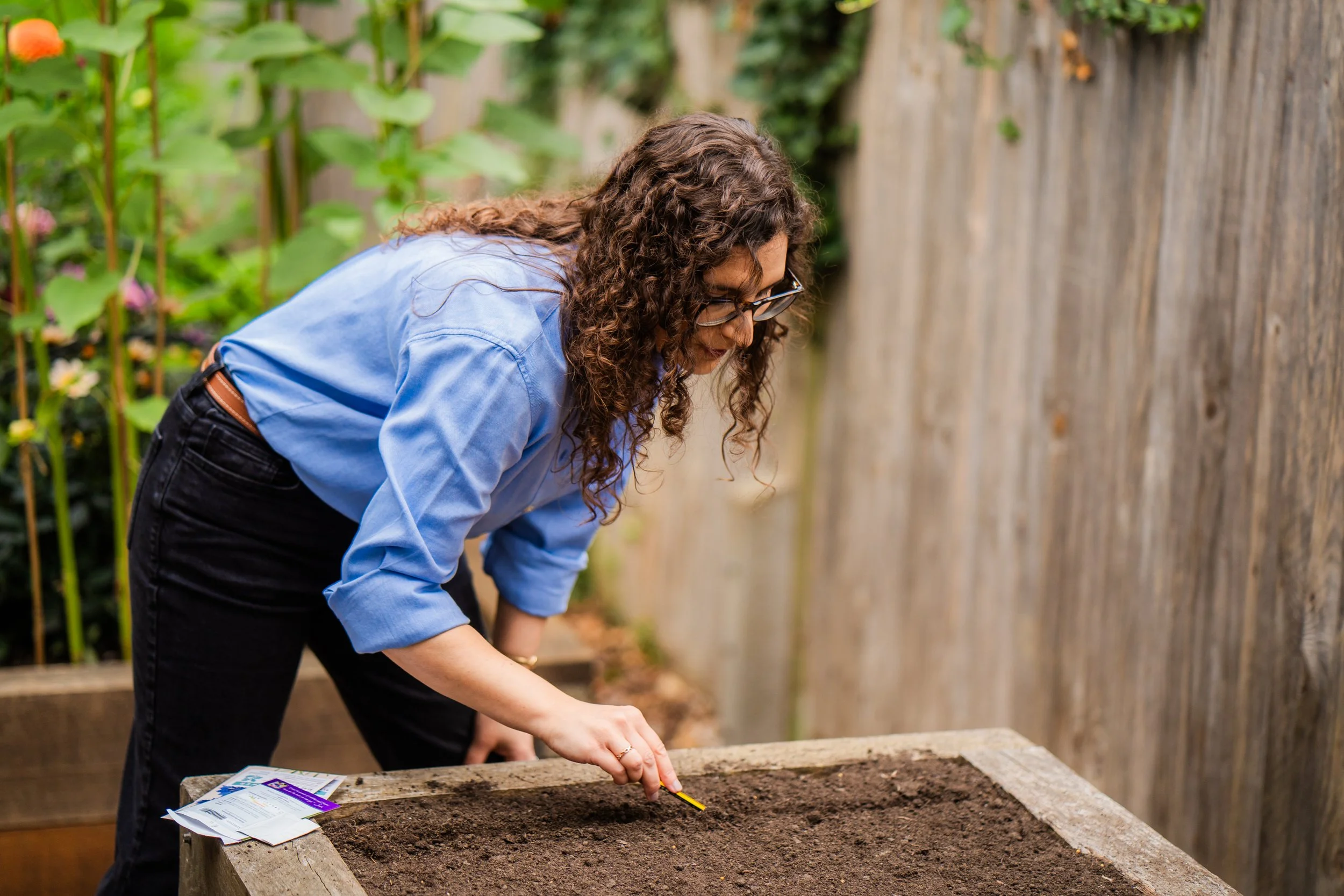
Photo by Vicki Knights Photography
It was a while after my dad had passed that I discovered the film Kiss the Ground which explored the role soil can play in looking after our planet. This was my first insight into what soil actually is and why it is important, as an ecosystem in itself, but also in relation to all other ecosystems and cycles of nature. It is literally the bedrock of everything that we know to be living, including us humans! As Wendell rightly told us, ‘without proper care for it we can have no life’.
As it turns out, I had misunderstood what soil was for most of my gardening life.
Soil is the top layer of the earth’s surface and is composed of particles of rock and minerals combined with organic matter, air and water. It is also its own ecosystem that comprises the soil and all of the living organisms that live in and on it. Within a small amount of soil exists an amazing community of bacteria, fungi, insects, worms and other living beings, interacting with and depending upon one another, as well as the plants that grow above them. Therefore, soil has an extraordinary capacity to support life. In fact, a single teaspoon of healthy, fertile topsoil can contain more living organisms than there are people on planet earth.
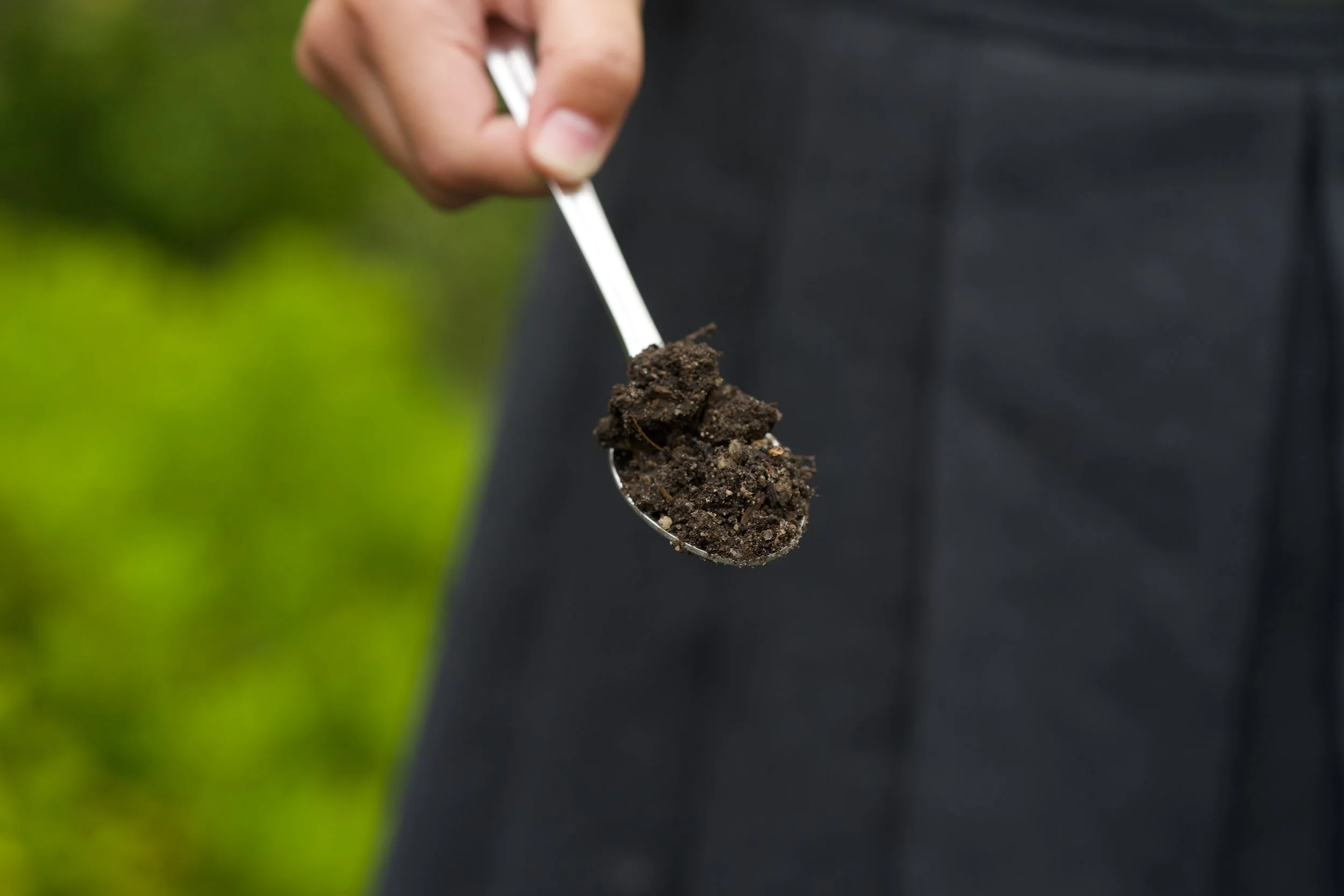
This was a revelation to me. What I had always thought of as a growing medium was full of life, and those living beings were all there supporting the things I was growing in return for their own survival and I was just another part of that community.
Once I knew and understood this, the way I saw my garden and the plants I love to grow, completely shifted. Instead of tending only to what is visible, I had a much larger appreciation for that which is not visible and this now informs nearly all of my decisions when it comes to what to plan for, what to plant, and how to nurture the soil so that it in turn can nurture the plants above ground.
So what difference does it make if soil is healthy or not?
This summer in the UK gave me a very tangible example of why soil health matters. After record levels of dry weather and drought, along with multiple heatwaves, the arrival of rain at the end of August felt like a huge relief. But healthy soil helps make the most of the rain that falls. Healthy soil acts like a living sponge absorbing, holding, filtering and storing water, while its structure allows water to move through the soil and become available to plants over time rather than running off the land. This means that the health of our soil, including the life beneath our feet, is connected to the life above ground and the health of the soil can influence how well our plants cope with periods of drought, how water moves through the landscape and ultimately how resilient the land can be.
However water is only part of the story.
Soil health matters because almost everything that we can see happening in our gardens is connected to an entire community of beings that we can’t see beneath it. The health of our plants is intimately connected to the health of the soil, and the fungi and microorganisms that live within it. These organisms are involved in breaking down organic matter and cycling nutrients for plants, which in turn provide the organisms with energy to live.
The soil isn’t simply holding everything in place; it is part of a much larger web of life and its health is vital to the life of most other living beings.
Healthy soil also makes the garden more resilient. When plants are healthier, they are better able to cope with pressures such as drought, heavy rainfall, pests and disease. As a result, they can also be less reliant on us for additional nutrients or intervention, because many of the functions we might otherwise have to provide are already being supported by the living systems around them. So instead of us intervening when not necessary we can take a step back and intervene in other ways which benefit the ecosystem as a whole.
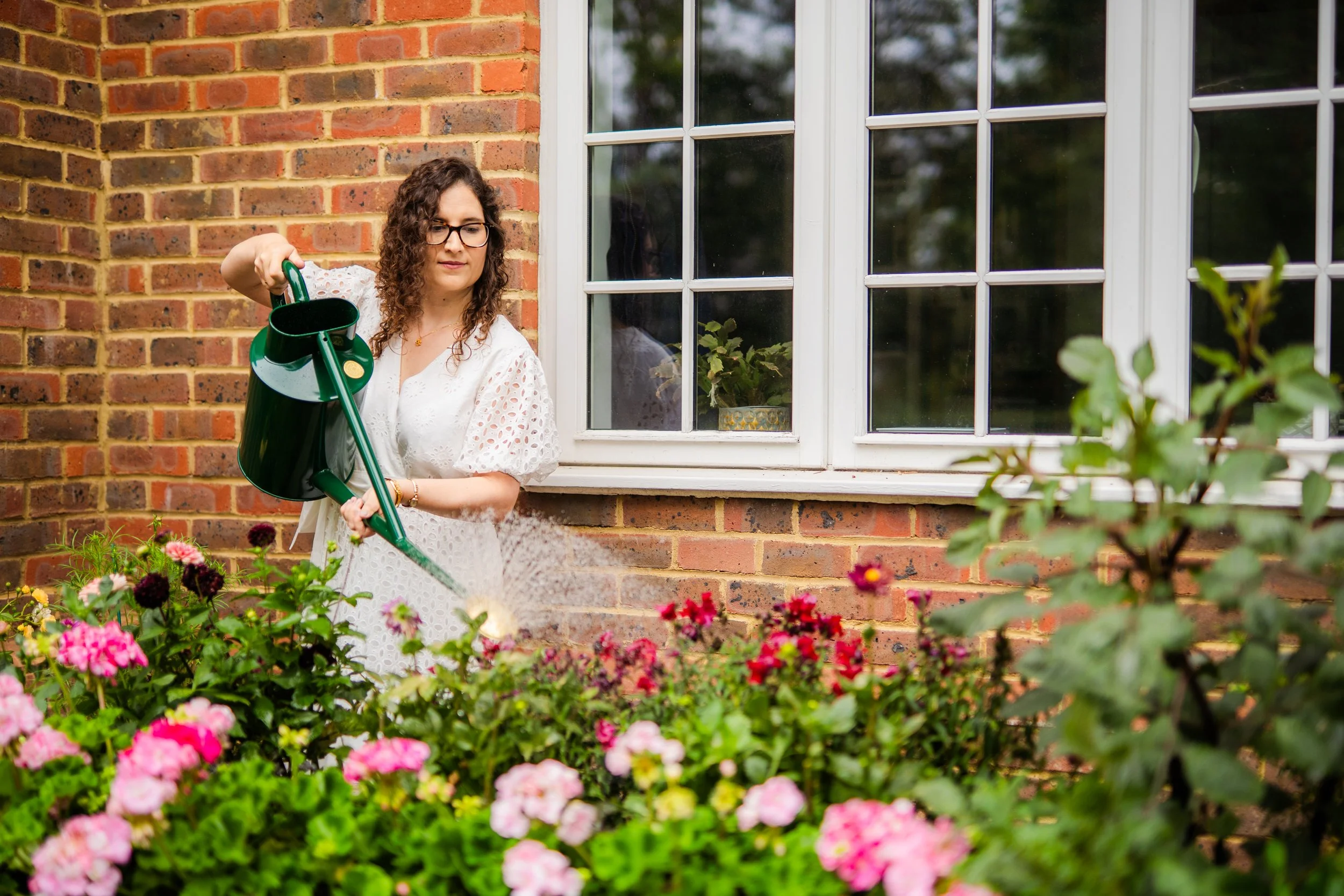
Photo by Vicki Knights Photography
Knowing and understanding this has changed the way I garden. I now try not to leave the soil bare to reduce evaporation and to keep living roots in the ground, feeding the life of the soil. I feed the soil with compost and organic matter and I disturb the soil a lot less than I used to in order to respect the community that already lives there.
In fact, the more I have learned about gardening since those early days of my dad teaching me how to do things, the more I understand that gardening is not about following rules. It is about relationships with other living beings, and discovering how I can live in community with them, helping them to thrive in return for all they do for me.
Thanks so much for stopping by!